









AI has made it dangerously easy to publish content that is perfectly fine. The grammar works. The structure is clean. The headline sounds competent. And after three paragraphs, you still have no idea who wrote it.
The problem is not that AI automatically makes content bad. Google explicitly says AI-assisted content can be useful, and its current guidance focuses on whether the result is original, accurate, helpful and made for people. The problem is what happens when every team gives a model the same thin brief and accepts the first polished answer.
The fix is not to avoid AI. It is to change where AI sits in the process.
Why does AI content start sounding the same?
Because generative models are very good at producing plausible patterns. When the prompt contains little original material, the safest output is usually the most familiar version of the topic: standard transitions, standard claims, standard examples and a tone that could belong to almost any brand.
Recent Harvard Business Review research on AI and innovation describes a similar risk in creative work: the same tools can speed up ideation while also pushing teams toward familiar, homogenized ideas when human judgment is weak. Google makes the same point from a search-quality angle by asking creators to add original information, first-hand experience and analysis instead of mass-producing summaries of what already exists.
Use AI to remove blank-page friction, not to remove the person from the page.
What should AI do, and what should the human own?
| Good jobs for AI | Keep human ownership |
|---|---|
| Organize research and notes | Point of view and strategic judgment |
| Generate angles and outlines | What the brand actually believes |
| Compare versions and spot repetition | Facts, claims and final approval |
| Adapt one idea into formats | First-hand examples and lived experience |
| Summarize long source material | Taste, humor, cultural context and risk |
| Proofread and tighten copy | The final voice and what gets published |
McKinsey calls scaled creativity one of the more mature AI capabilities in marketing, and reports that some organizations are already seeing large productivity gains. That is useful. But productivity is not the same as distinctiveness. The workflow still needs a person deciding what deserves to exist.
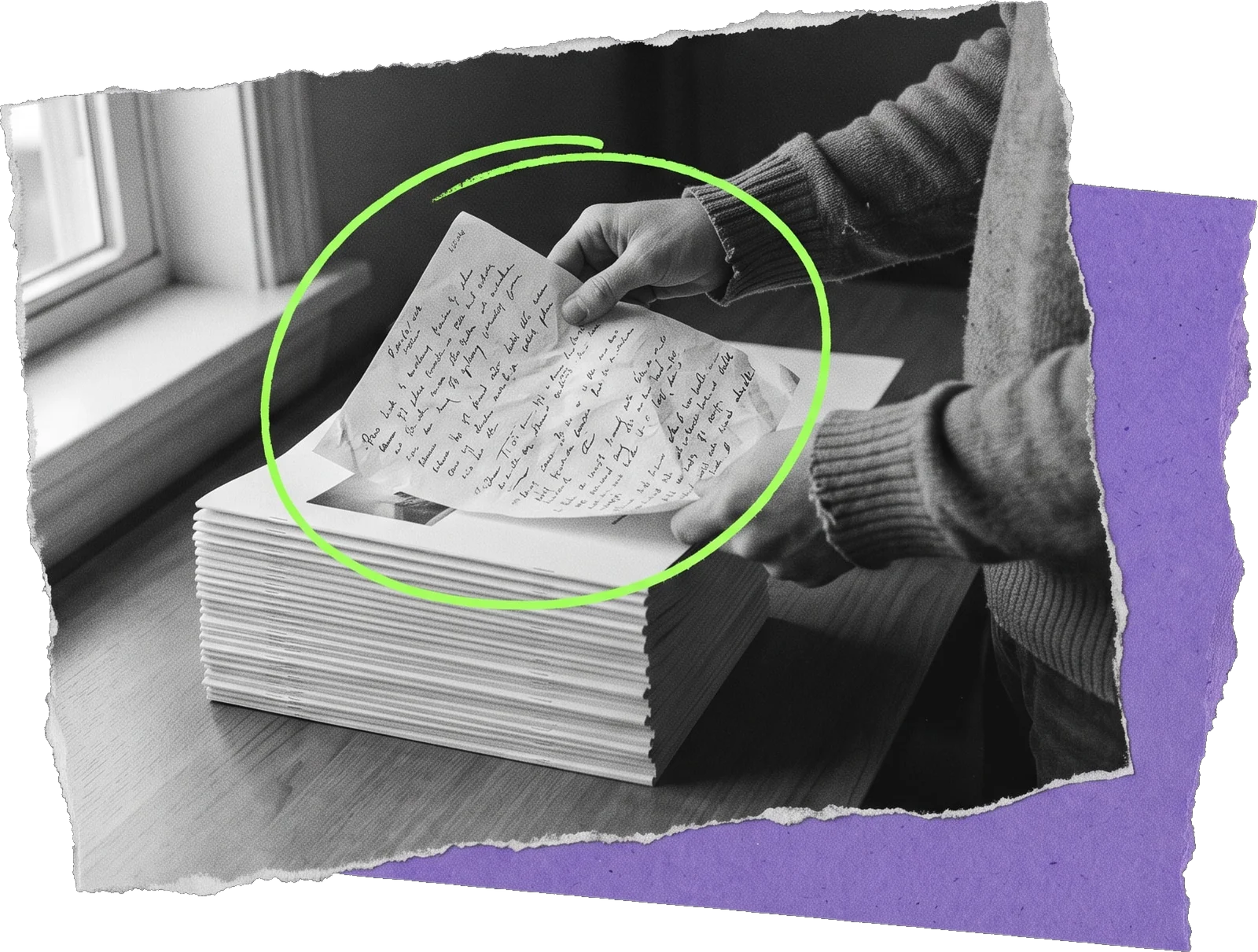
The 8-step workflow for AI-assisted content that still sounds human
1. Start with raw material, not a blank prompt
Feed the process something the internet does not already have in exactly the same form: interview notes, customer questions, sales objections, research findings, internal data, product details, a founder opinion, campaign results, screenshots, transcripts or examples from the field. AI becomes more specific when the source material is specific.
2. Decide the point before you draft
Write one sentence answering: what are we actually trying to say? If the point is “AI is changing marketing,” the model will produce a textbook. If the point is “AI makes average content cheaper, so distinctiveness becomes more valuable,” the draft has somewhere to go.
3. Build a real voice brief
Avoid vague instructions such as “make it premium” or “make it human.” Define concrete rules: sentence length, formality, words you never use, whether humor is allowed, how direct the brand is, what evidence is required, how headlines work, and three examples of copy that genuinely sounds right.
4. Ask for options before asking for a final answer
Use AI to explore five hooks, three structures, opposing arguments or questions the reader may have. Choosing among options keeps the human in the decision loop and reduces the tendency to accept the first generic draft.
5. Draft from the source pack
Give the model the approved material and ask it not to invent missing facts. Separate sourced facts from opinion. If a claim matters, keep the source next to it while drafting so fact-checking is not an afterthought.
6. Edit for specificity
Replace abstract words with concrete nouns, numbers, examples, names, observations and consequences. “Improve customer experience” is generic. “Remove the shipping surprise that appears only at checkout” is something a reader can picture.
7. Edit for voice and rhythm
Read the piece aloud. Remove the smooth transitions nobody says in real life. Break the repetitive paragraph structure. Keep one sharp sentence where the draft used four polite ones. Add the language your customers or team actually use.
8. Run a fact, value and sameness check
Verify factual claims, names, links, numbers and dates. Then ask two harder questions: did the reader learn something useful, and could a competitor publish this unchanged? If the second answer is yes, go back.
Check out what our CEO is writing about: AI changed marketing, but not in the way people think
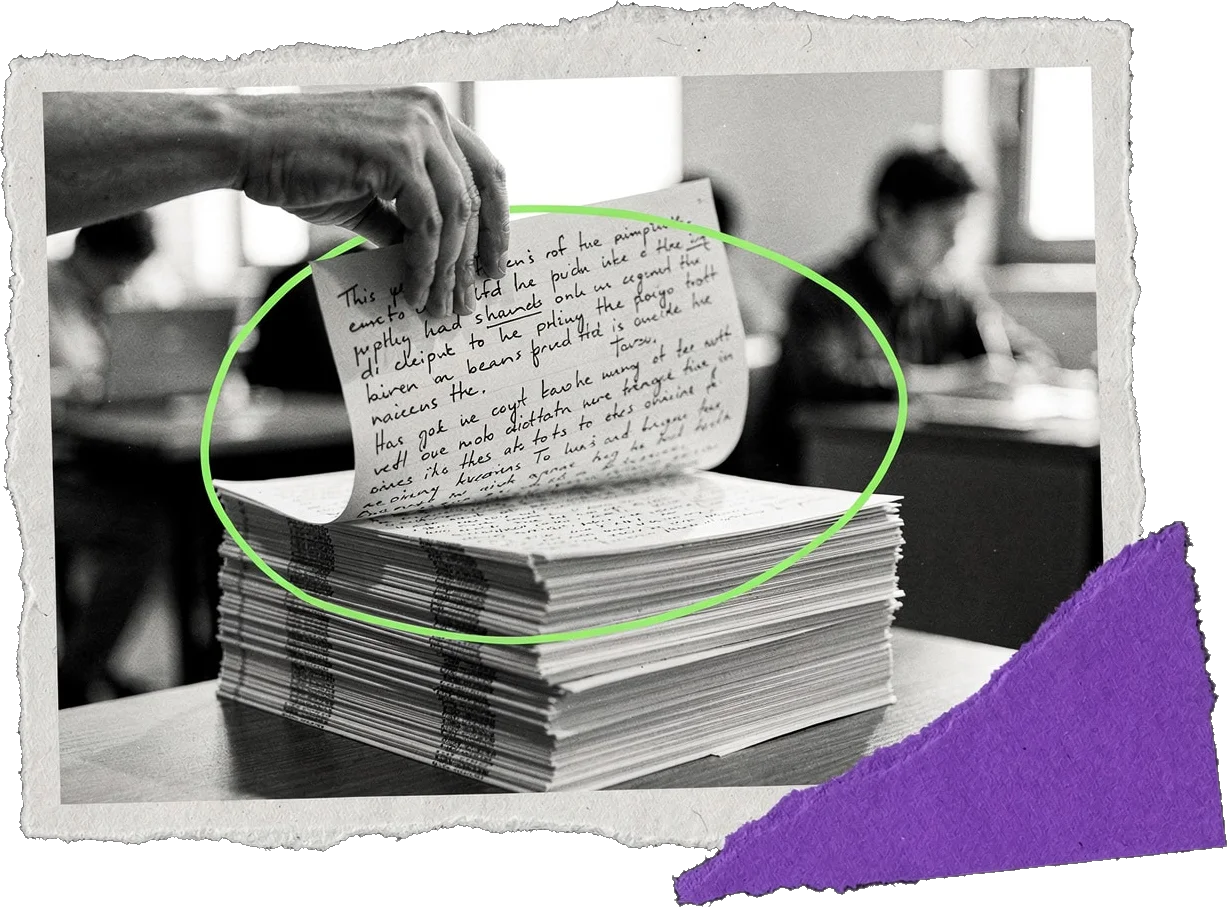
A practical brand voice brief for AI
A voice brief should work like a set of editing decisions, not a mood board. Keep it short enough that people actually use it.
| Define | Example instruction |
|---|---|
| Audience | Write for operators and decision-makers who know the basics. Do not explain obvious marketing terms unless needed. |
| Tone | Direct, useful, curious. Professional without sounding corporate. |
| Banned filler | Avoid “in today’s fast-paced landscape,” “unlock,” “game-changer,” “revolutionize,” and empty future-of statements. |
| Evidence | Any factual claim that could be checked needs a source, example or clearly labelled inference. |
| Point of view | Do not hide behind “it depends” when the evidence supports a recommendation. |
Three more rules help: vary sentence rhythm so every paragraph does not sound machine-cut; use real or clearly hypothetical examples, never invented customers or results; and finish with a useful next step rather than an inspirational summary that could close any article.
What does generic AI writing look like?
Generic AI writing is usually not identified by one magic phrase. It is a pattern: broad claims, symmetrical paragraphs, too many transitions, no tension, no real example, no source and a conclusion that says almost nothing changed.
| Generic version | More useful version |
|---|---|
| “AI is transforming the way brands create content.” | “AI made the first draft cheap. That means the expensive part is now judgment: what deserves to be said, what is true and what sounds like us.” |
| “Customer experience is more important than ever.” | “If customers keep asking the same question before buying, put the answer where the hesitation happens.” |
| “Brands must stay ahead of the competition.” | “Choose one problem you can explain better than competitors and build the content around that.” |
Where should AI be used in the content workflow?
Use it where speed creates leverage without replacing the source of the value. Research support, clustering notes, outlining, transforming formats, translating a finished idea, finding gaps, editing and producing variants are all strong uses. Publishing hundreds of lightly edited pages because the tool makes it possible is not a content strategy.
Google’s current guidance is unusually clear on this point: generative AI can help with research and structure, but mass generation without added value can fall into scaled content abuse. It also recommends manual fact-checking because models can produce plausible inaccuracies.
The 10-minute pre-publish test
- Can you identify one sentence that contains the actual point of view?
- Is there at least one piece of information, analysis or experience that did not come from generic web summaries?
- Are factual claims checked against reliable sources?
- Would the piece still make sense if the brand name were removed?
- Does it contain a real example, useful detail or decision the reader can apply?
- Did you remove filler phrases and repeated transitions?
- Does the rhythm sound like a person from the brand, not a default assistant?
- Are quotes, customer stories and results genuine?
- Is the content helping the intended audience, rather than existing only because a keyword looked attractive?
- Would you be comfortable putting a real author’s name on it?
Final thoughts
The advantage of AI is not that it can make everyone sound professional. That part is becoming cheap. The advantage is that it can give people more time to research, think, test, edit and make the work more specific.
The brands that sound human will not be the brands that hide AI best. They will be the brands that still have something recognizably theirs to say.